 John
JohnIntroduction: Compliance Meets the Night Sky
Compliance drives every decision in aerial illumination. Today’s sky laser systems must satisfy safety codes, operational uptime, and public trust. In legal terms, the fixture is a Class 4 emitter if output exceeds 500 mW, and that triggers strict controls under IEC 60825 and related aviation notices (where applicable). These are not soft guidelines. They set real limits on exposure, beam divergence, and permissible scanning of occupied areas. Yet shows still need long-throw visibility and crisp shafts of light across humid air. The conflict is obvious—and costly.

Here is the practical picture: crews face short load-in windows, uneven weather, and mixed power sources. Power converters hum, thermal management matters, and interlock circuits must hold. Data matters too: duty cycle, MPE thresholds, and IP ratings. So the core question is simple: how do we reconcile legal thresholds with audience-scale impact without overbuilding rigs? Let’s unpack where “more watts” helps, where it hurts, and what comes next for operators moving fast and staying compliant. Transitioning now to the real limitations behind the headline figures.
Hidden Flaws in the Power Race
Where do big watt numbers fail?
Many buyers fixate on headline output. A unit labeled as a 60w laser light sounds decisive. But beam quality, divergence, and optics losses decide what the audience sees. Look, it’s simpler than you think: if beam divergence rises by a fraction of a milliradian, the shaft blooms and apparent brightness drops at distance. Thermal throttling can reduce sustained output, especially under hot truss or in enclosed towers. Galvanometer scanners also impose speed and angle limits. Push them too hard and you get artifacts, not clarity. In other words, “60 W” on paper may not equal “clear aerial vectors at 1 km” in practice.
Legacy workflows add friction. DMX/Art-Net timing, noisy power converters, and ripple in the modulation frequency can blur effects—funny how that works, right? If edge computing nodes are not aligned with the fixture’s DSP control, fades stutter and power peaks hit at the wrong moments. Weather compounds the issue. Haze density varies, so your brightest scenes may arrive during poor particulate distribution. Traditional fixes—oversizing output or cranking dwell times—risk compliance and shorten component life. The hidden pain point is predictability: without closed-loop sensing and smarter thermal management, operators chase brightness with guesswork instead of control.
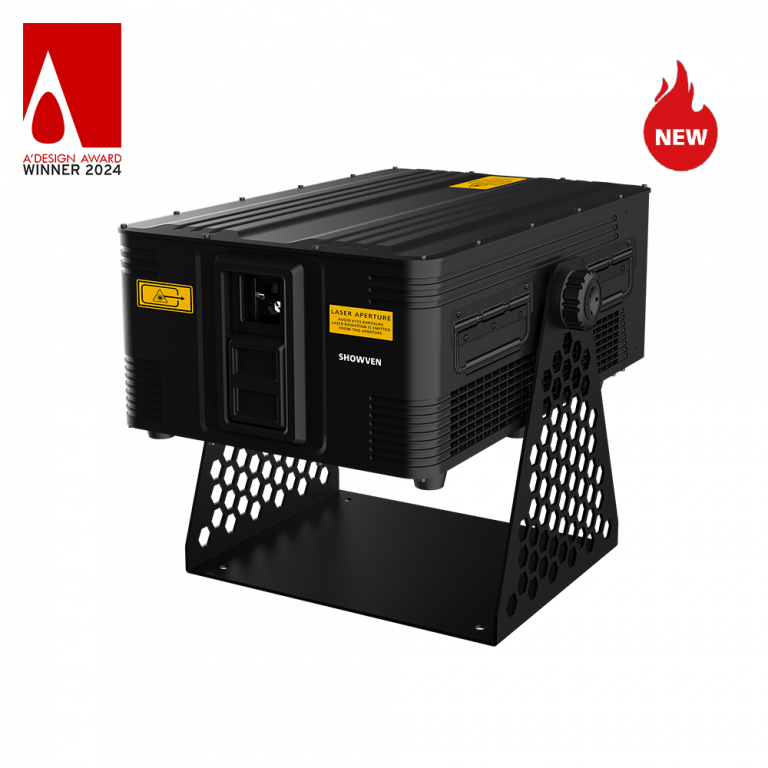
Comparative Insight: Toward Smarter Brightness, Not Just Bigger Numbers
What’s Next
The next wave separates effective brightness from raw wattage. Systems that fuse DSP beam shaping, fast photodiode feedback, and variable divergence optics can hold a tighter profile at range with less stress. That is the new principle: govern energy where the audience perceives it, not where the spec sheet inflates it. A modern sky laser light can coordinate active thermal management with scan geometry, so output stays consistent under heat load. Add GPS-synced timing and improved modulation linearity, and your aerial patterns look cleaner—at lower risk and with fewer spikes. This is not hype; it is control theory applied to pixels of light, frame by frame (and loggable for compliance).
Comparatively, older rigs chase reach by brute force. Newer designs seek efficiency per candela delivered at target distances. They lean on quieter power stages, smarter interlocks, and better diagnostics. Choose with intent. Use three evaluation metrics: first, effective brightness per watt at your design throw (consider beam divergence and sustained output, not peaks). Second, stability under real duty cycles and ambient heat (monitor throttling behavior, ripple, and scan integrity). Third, safety and audit maturity (interlock redundancy, error logs, and remote overrides). Meet these, and your shows scale with less gear—and fewer headaches. Practical, disciplined, and ready for field realities. Closing note: stay comparative, not speculative, and let measured performance guide you. Showven Laser

 SEO
SEO